
Book a Session

Material Your skills are God level. Your musicianship is uncanny. You feel like you are ready to take on the world with your musical supremacy. Time to hit the studio. But coming into the studio without a plan isn’t really going to be the most effective way to capture your awesomeness. It’s extremely beneficial to … Read more
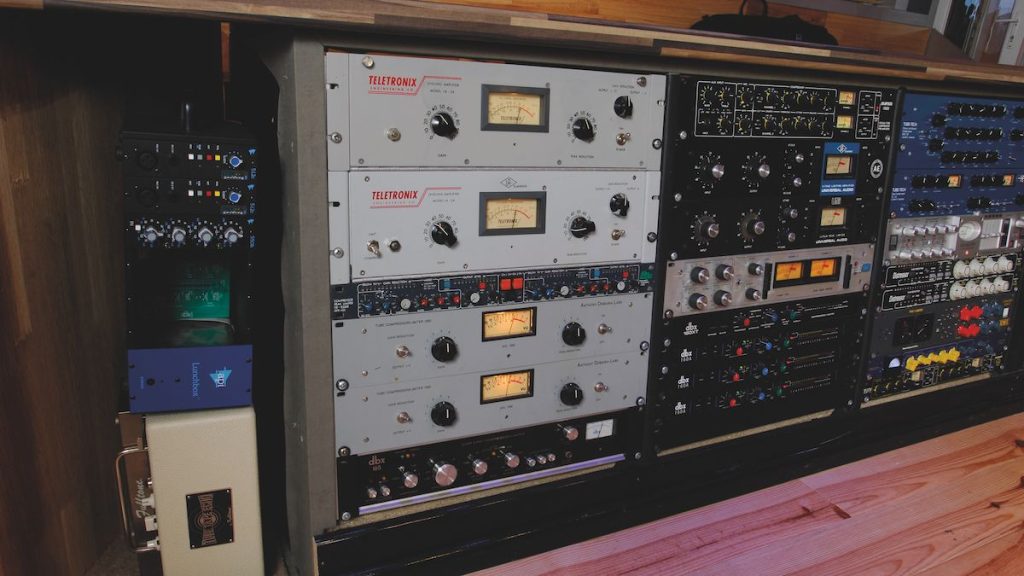
Audio engineers commonly use several types of compressors, each with its own characteristics and applications. Here are some popular compressor types: FET Compressors (The 1176) A mainstay in the recording studio, the 1176 compressor is unique in several ways compared to other compressors. The 1176 utilizes a Field-Effect Transistor (FET) as its gain reduction element, … Read more

Compression is one of the most fundamental tools in audio mixing, and, in the most basic terms, is used  to control the dynamic range of a sound or a mix. Dynamic range refers to the difference between the softest and loudest parts of a recording. But, controlling the dynamic range in a variety of ways … Read more

As audio engineers, having a comprehensive knowledge of the frequency spectrum and how to manipulate it is imperative to achieving well balanced mixes. We often visualize and manipulate the different frequencies present in a single track, or within an entire mix, to achieve a desired sonic effect. Audio Frequencies are what we perceive as pitch, … Read more

Mics pickup sound from certain directions and no so much from other directions depending on the shape and style of the “Polar Pattern”. Depending on your sound source and the other sounds in the area, choosing the appropriate pattern can help you gather just the sounds you want into the mic and leave any potential … Read more

Let’s start building our knowledge with the 3 main mic types: Dynamic, Condenser, and Ribbon.  Dynamic Microphones Dynamic mics are made with a diaphragm suspended in a magnetic field. Sound waves vibrate the diaphragm and create AC voltage. These rugged workhorses get the job done and are well suited to high sound levels (SPLs), handheld … Read more

Microphones do 1 essential task: take in sound and turn it into an electrical signal. In and of itself, a microphone does not make anything louder. To make a sound louder you connect the mic to an amplifier, which makes the electrical signal stronger, and then to a speaker, which changes that electrical signal back … Read more

Acoustic Guitar and Vocal Recording Techniques

A guy and a guitar. No simpler setup has ever existed in the history of audio engineering, right? Throw a microphone near the man’s lips, a Shure Beta 58 maybe, place your favorite condenser near the soundhole of the guitar, and hit that big red record button. Easy enough. But then you listen to what … Read more

Booking studio time is an exciting moment in your musical career, and a major step in taking your music to a whole new level. So, when you are ready to embark on the journey of committing your music to disk, you want to be sure you are prepared to make the most of your time … Read more

The moment the recording starts, the soul of your song is born. So before you enter the studio, it is beneficial to have a clear vision of what your song/recording will be in its final form. This can help inform your tracking sessions, in terms of musicians and instrumentation, and make planning for a song … Read more